- Contact Us
- -
- Payment
- -
- 中文版
Knowledge Center · 2026-09-15 09:38:56 · 8 hits
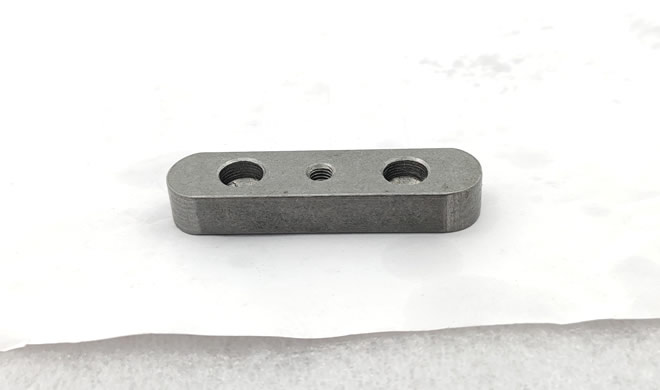
(Also called parallel keys / machine keys)
When procuring flat keys, the most fundamental dimensions to confirm are width, height (thickness), and length. The width and height must match the shaft keyway, while the length is determined by the hub length and the actual torque to be transmitted. For standard flat keys, the common width and height can be derived from the shaft diameter—but it is a mistake to assume that "the same shaft diameter always means the same key size." Different standards and design requirements can yield different dimensions, so it is best to specify the applicable standard and exact specification at the time of purchase.
Width and Height Must Match the Keyway
After installation, part of the flat key sits in the shaft keyway while the other part engages the hub keyway. The key width and height therefore directly govern the fit among shaft, key, and hub. If the width is too large, the key may not enter the keyway; if too small, excessive side clearance results. A mismatched height can also prevent the key from seating correctly in both the shaft and hub grooves. Especially when replacing an existing key, do not measure only its length—also confirm the width, height, and the corresponding keyway dimensions.
(Dimensions aligned with GB/T 1096, ISO 773, and DIN 6885; type A parallel key)
Shaft Diameter d (mm) | Key Width b (mm) | Key Height h (mm) |
|---|---|---|
| 6 – 8 | 2 | 2 |
| >8 – 10 | 3 | 3 |
| >10 – 12 | 4 | 4 |
| >12 – 17 | 5 | 5 |
| >17 – 22 | 6 | 6 |
| >22 – 30 | 8 | 7 |
| >30 – 38 | 10 | 8 |
| >38 – 44 | 12 | 8 |
| >44 – 50 | 14 | 9 |
| >50 – 58 | 16 | 10 |
| >58 – 65 | 18 | 11 |
| >65 – 75 | 20 | 12 |
| >75 – 85 | 22 | 14 |
| >85 – 95 | 25 | 14 |
| >95 – 110 | 28 | 16 |
| >110 – 130 | 32 | 18 |
| >130 – 150 | 36 | 20 |
| >150 – 170 | 40 | 22 |
| >170 – 200 | 45 | 25 |
| >200 – 230 | 50 | 28 |
| >230 – 260 | 56 | 32 |
| >260 – 290 | 63 | 32 |
| >290 – 330 | 70 | 36 |
| >330 – 380 | 80 | 40 |
| >380 – 440 | 90 | 45 |
| >440 – 500 | 100 | 50 |
Key length series (L, mm): 6, 8, 10, 12, 14, 16, 18, 20, 22, 25, 28, 32, 36, 40, 45, 50, 56, 63, 70, 80, 90, 100, 110, 125, 140, 160, 180, 200, 220, 250, 280, 320, 360, 400, 450, 500…
(Select L from the series per the effective contact length and transmitted torque; see the article's "Length" section.)
Length Is Not Determined by Hub Length Alone
The key length must be set with reference to the hub length, the effective contact length, and the transmitted torque. Too short a key reduces the effective bearing area and raises contact pressure between key and keyway; too long a key may interfere with the shaft shoulder, retaining ring, or other structure. When purchasing, confirm the actual effective working length rather than simply matching the full hub length. For drivetrains transmitting high torque or subject to shock loads, the length must be verified against the real force conditions.
Keyway Dimensions and Tolerances Also Need Confirmation
When procuring a key for repair or replacement, confirming the key's own dimensions is sometimes not enough. Also inspect the shaft keyway width, keyway depth, and the relevant hub keyway dimensions to ensure a proper fit after installation. Particularly after a key has loosened, worn, or failed in shear, check whether the shaft or hub groove has already deformed. If the keyway itself is worn, fitting a new key of the same size may still fail to restore reliable transmission.
Purchasing Recommendations
At minimum, specify the standard, material, width, height, and length. For replacement parts, also confirm the shaft diameter and both the shaft and hub keyway dimensions—avoid relying solely on the old key's measurements. For drivetrain components such as motors, gearboxes, sprockets, and timing pulleys, confirm the key length against the actual transmitted torque and working load. If the equipment sees frequent start-stop, shock loading, or repeated forward/reverse operation, pay extra attention to the key-to-keyway fit. For standard flat keys, prioritize the corresponding standard and specification number; for non-standard structures, provide complete cross-section dimensions and length requirements, and—where necessary—confirm tolerances and machining details such as chamfers.
Common Misconceptions
A frequent misconception is that procuring a flat key only requires telling the supplier "the shaft diameter." Shaft diameter is a useful basis for selecting a standard key, but it does not replace confirmation of the specific standard and key dimensions. Another misconception is measuring only the old key before buying. If the old key is already worn or deformed, the measured size may not represent the original design. For repair purchases, inspect both the shaft and hub grooves and check for abnormal wear.
| Criterion | Standard Flat Key | Non-standard Flat Key |
|---|---|---|
| Definition | Dimensions defined by an established standard (e.g., GB/T 1096, ISO 773, DIN 6885) | Custom cross-section or length not covered by any standard |
| Selection basis | Shaft diameter + standard number | Full drawing or detailed dimensions supplied by customer |
| Dimension source | Look up from standard tables (Table 1) | Provided cross-section b × h and length L |
| Tolerance & chamfer | Fixed by standard; usually no extra note needed | Must be specified (tolerance grade, chamfer, fillet) |
| Procurement lead time | Short — often stock or fast turnaround | Longer — requires custom machining |
| Relative cost | Lower (mass-produced) | Higher (low-volume / made-to-order) |
| Typical use | General drives: motors, gearboxes, pulleys, couplings | Special structures, space-limited or high-load joints |
| Procurement tip | Quote the standard + specification number | Supply complete b × h × L, material, and machining requirements |
FAQ
Q: What are the most basic dimensions to confirm when buying a flat key?
A: At minimum, confirm width, height, and length, and specify the applicable standard.
Q: Can I determine the key size directly from the shaft diameter?
A: Shaft diameter is a good basis for selecting a standard size, but you still must confirm the specific standard and keyway dimensions.
Q: What should the key length be based on?
A: Mainly the hub length, the effective bearing length, and the actual transmitted torque.
Q: Why measure the keyway when buying a replacement key?
A: If the shaft or hub groove is already worn, fitting a same-size new key may still leave it loose.
Q: Does material need to be confirmed when purchasing flat keys?
A: Yes. For general drives, select a suitable material per the standard; for heavy, shock, or special-environment duty, confirm the material and strength requirements against actual operating conditions.
Copyright © 2016-2025 Forrun (Guangdong) Industrial Technology Co., Ltd All Rights Reserved.