- Contact Us
- -
- Payment
- -
- 中文版
Knowledge Center · 2026-11-17 09:51:58 · 17 hits
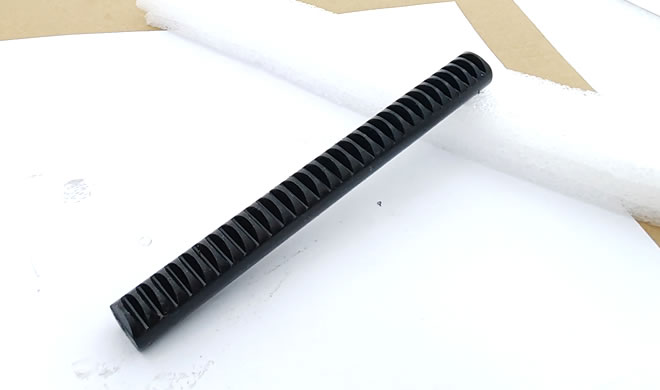
A rack is a toothed bar that converts rotary motion into linear motion, typically working in pair with a pinion (a fine-pitch gear). This drive is widely used in automation equipment, lifting platforms, CNC machine tools, and industrial door systems. It offers a simple structure, high transmission efficiency, and easy maintenance—but its service life depends heavily on material, loading, lubrication, and installation quality.
1. Overview of Racks
In a rack-and-pinion system, the pinion's rotation drives the rack along a straight path, delivering precise linear travel without the length limitations of a ball screw. Because the load is distributed across multiple teeth, the arrangement handles high thrust and long strokes economically. The trade-off is that lifespan is sensitive to tooth-surface conditions, so correct specification and upkeep are essential to avoid premature failure.
2. Main Factors Affecting Rack Life
2.1 Material and Heat Treatment
Long-life racks are commonly made from medium-carbon steel (such as 45# steel) and hardened by quenching, raising surface hardness to HRC 45–55. This markedly improves wear resistance and fatigue strength. Racks made from untreated ordinary steel wear far faster and should be avoided in demanding drives.
2.2 Load and Operating Frequency
Sustained high loads, frequent direction reversals, or prolonged high-speed running accelerate tooth-flank wear. Under ideal design conditions the theoretical service life can reach 20,000–30,000 hours, but under heavy load with insufficient lubrication, noticeable degradation can appear within a few thousand hours.
2.3 Lubrication and Maintenance
Regular application of grease or gear oil effectively extends service life by preventing dry friction that damages the meshing surfaces. A lubrication interval of every 500–1,000 operating hours is generally recommended, adjusted for duty and environment.
2.4 Installation Accuracy
If straightness of the rack, mesh clearance (backlash), and pinion coaxiality are not tightly controlled, meshing becomes uneven. This produces localized early wear and lowers overall life, even when the components themselves are high quality.
3. Typical Service-Life Reference
Under normal industrial conditions, the service life of standard straight racks typically falls within these ranges:
Light-load duty: over 30,000 hours
Medium-load continuous operation: approximately 10,000–20,000 hours
Harsh environment or high-frequency reversing: only 3,000–8,000 hours
With proper maintenance—oil replacement, periodic cleaning, and clearance adjustment—service life can be extended by more than 30%.
4. Recommendations to Extend Rack Life
Match module and tooth count correctly: Avoid applying high torque to a small-module rack, which overloads the teeth.
Pair hardened surfaces: Use a hardened (hard-tooth-surface) rack together with a hardened pinion for balanced wear.
Use rack-specific guide rails: Maintain linear-motion accuracy and support the rack against deflection.
Provide preload at installation: A preload device reduces backlash-induced vibration and the associated wear.
Inspect and replace proactively: Monitor wear condition regularly and replace any abnormal rack before it damages the pinion or degrades accuracy.
5. Worked Life Estimation Example
The following is a simplified engineering estimate to illustrate how load, speed, and duty translate into service life. It is intended for preliminary screening only; final specification should follow the manufacturer's rated capacity and a formal calculation such as ISO 6336.
5.1 Input Parameters
| Parameter | Value |
|---|---|
| Module, m | 2 mm |
| Pinion teeth, z | 20 |
| Surface hardness (rack & pinion) | HRC 50 |
| Pinion speed, n | 1,500 rpm |
| Annual operating time | 2,000 h (8 h × 250 d) |
| Actual tangential force, Ft | 1,500 N |
| Catalog rated force, Ft₀ | 1,000 N |
| Baseline life at rated load, L₀ | 12,000 h |
| Life exponent, p | 3 (contact-fatigue / pitting) |
5.2 Engagement Frequency
Each pinion tooth meshes once per revolution, so the annual tooth-engagement count is:
n × 60 × z × annual hours = 1,500 × 60 × 20 × 2,000 ≈ 3.6 × 10⁹ engagements/year
At 2,000 operating hours per year, this corresponds to 1.8 × 10⁶ engagements per hour—showing how quickly a high-speed pinion accumulates load cycles.
5.3 Life Estimate
For hardened tooth surfaces, contact-fatigue life varies roughly with the cube of the load ratio:
L = L₀ × (Ft₀ / Ft)^p
L = 12,000 × (1,000 / 1,500)³ = 12,000 × 0.296 ≈ 3,560 h
At 2,000 operating hours per year, this equates to roughly 1.8 years of service—consistent with the 3,000–8,000 hour band for harsh or overloaded duty in Section 3.
5.4 Sensitivity to Operating Conditions
| Condition | Life multiplier | Estimated life |
|---|---|---|
| Rated load (Ft = Ft₀), good lubrication | 1.00 | ~12,000 h |
| Overload 1.5× (Ft = 1,500 N), good lubrication | (0.667)³ ≈ 0.30 | ~3,560 h |
| Same overload + poor lubrication (×0.7) | 0.21 | ~2,500 h |
| Same overload + soft pair HRC 40 (×0.5) | 0.15 | ~1,750 h |
The table demonstrates that exceeding the rated tangential force is the dominant life reducer, while inadequate lubrication and insufficient hardness compound the loss. Keeping force at or below the rated value, maintaining a proper lubrication interval, and specifying hardened surfaces are the three highest-leverage actions to reach the multi-decade life range.
Copyright © 2016-2025 Forrun (Guangdong) Industrial Technology Co., Ltd All Rights Reserved.