- Contact Us
- -
- Payment
- -
- 中文版
Knowledge Center · 2026-09-09 09:45:53 · 9 hits
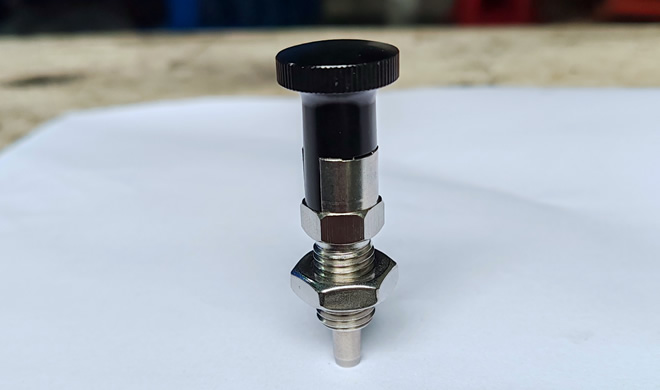
1. Product Definition and Function
1.1 Definition
An indexing plunger is a positioning device used in machinery to achieve precise rotary indexing of workpieces or components during processing. Typically mounted on machine tools or automated equipment, it serves as a critical component that ensures machining accuracy and production efficiency.
1.2 Key Functions
Improved machining accuracy – By precisely controlling the rotational angle of the workpiece, the indexing plunger significantly enhances dimensional consistency and surface quality.
Increased production efficiency – Its rapid positioning capability reduces workpiece adjustment time, accelerating the overall production cycle.
Simplified operation – For applications requiring frequent changes of machining position, the indexing plunger streamlines operation steps, reduces manual intervention, and raises the level of automation.
Adaptability – Whether for low-volume prototyping or high-volume continuous production, it delivers a stable and reliable positioning solution.
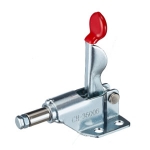
Handle-Type Indexing Plunger
(Note: Shown above is the handle-operated variant, commonly selected for manual, tool-free indexing.)
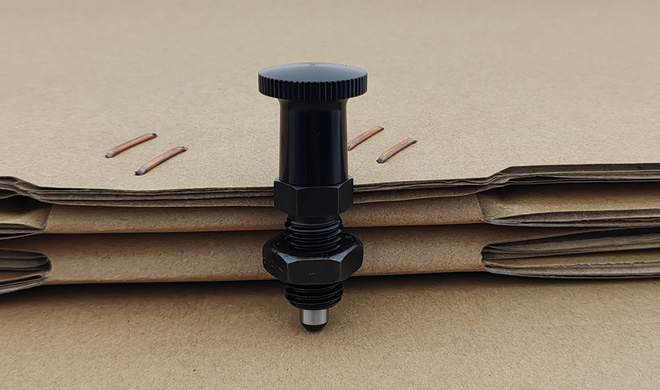
2. Types and Operating Principles
2.1 By Actuation Method
Manual indexing plunger – Operated by hand; suitable for applications with moderate accuracy requirements or smaller production batches.
Motorized (electric) indexing plunger – Driven by a motor for fast, accurate automatic positioning; widely used in high-precision machining and automated production lines.
Pneumatic indexing plunger – Powered by compressed air, offering fast response and lower cost; ideal for rapid-indexing applications.
2.2 By Structure
Fixed indexing plunger – Position is set during installation and cannot be adjusted; suited to repetitive indexing at a specific angle.
Adjustable indexing plunger – Allows the indexing angle to be adjusted within a defined range, providing greater flexibility for diverse machining requirements.
Operating Principle
The indexing plunger operates on the basis of precise mechanical fit. When positioning is required, the plunger extends and engages tightly with the locating hole in the workpiece, locking it in place. Once an operation is complete, the plunger retracts, allowing the workpiece to rotate to the next preset position in preparation for the following cycle.
3. Installation & Maintenance Guidelines
3.1 Pre-Installation Preparation
Check equipment condition – Verify that the host machine is in good condition, with no worn or damaged parts that could affect performance.
Clean the work area – Remove dust and debris from the mounting area to prevent contamination that could compromise installation and subsequent operation.
3.2 Installation Steps
Determine mounting position – Select a position based on machining requirements and equipment layout, ensuring the plunger can perform its indexing function effectively.
Calibrate installation accuracy – Use appropriate tooling and methods to confirm that the post-installation positioning accuracy meets specifications.
3.3 Routine Maintenance
Periodic inspection – Regularly check the plunger and related components to detect and resolve potential issues early.
Lubrication – Lubricate the plunger periodically per the manufacturer's recommendations to reduce wear and extend service life.
4. Application Cases
Automotive Manufacturing
Body welding lines – Indexing plungers fix body components to ensure precise alignment of weld points, improving both weld quality and production efficiency.
Engine assembly lines – They enable accurate positioning of critical components during engine assembly, guaranteeing assembly precision.
Electronics Manufacturing
PCB assembly – In SMT (Surface Mount Technology) lines, indexing plungers ensure correct board positioning across different process stages, improving placement accuracy.
Precision instrument assembly – They provide the necessary locating support during precision instrument assembly, ensuring smooth and reliable assembly operations.
Copyright © 2016-2025 Forrun (Guangdong) Industrial Technology Co., Ltd All Rights Reserved.