- Contact Us
- -
- Payment
- -
- 中文版
Knowledge Center · 2026-09-05 10:14:35 · 5 hits
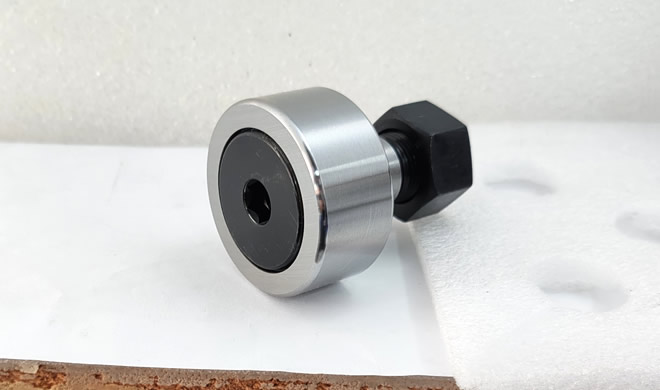
1. Product Definition and Core Functions
Definition
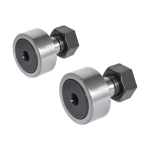
Cam followers are application‑specific mechanical components engineered for motion conversion, most commonly converting rotary motion into linear or complex planar motion. Integrating cam profile and rolling‑bearing features, these units deliver efficient power transmission while minimizing friction and abrasive wear.
A typical cam follower assembly consists of precision‑machined cam profiles, closely‑fitted bearing inserts and supporting hardware, which together guarantee stable performance and long‑term reliability under diverse operating conditions.
Core Functions
Within automated production lines, cam followers serve as critical motion‑control components to achieve precise positioning and speed modulation, directly boosting overall equipment throughput. They are widely deployed across packaging, printing, textile machinery and other industrial sectors, ideal for applications requiring continuous, smooth cyclic motion output.
2. Product Classification and Operating Principle
Classification by Material
Metallic Versions: Constructed from stainless steel, alloy steel and other metal grades. Suited for harsh operating conditions including high‑temperature exposure and heavy‑load cyclic operation.
Non‑metallic Versions: Mainly made of engineering plastics or nylon. Optimized for light‑load, low‑speed working scenarios.
Classification by Structural Design
Single‑cam Type: Simple compact construction, deployed for basic rotary‑to‑linear motion conversion tasks.
Dual‑cam Type: Generates sophisticated motion profiles, well‑matched to high‑precision automation requirements.
Composite Type: Integrates multiple cam geometries to fulfil custom‑defined process motion sequences.
Operating Principle
As the cam rotates, its contour profile drives the follower arm or follower rod to execute pre‑programmed motion sequences. The geometric profile of the cam defines displacement, velocity and acceleration characteristics of the output movement, while the embedded bearing assembly ensures smooth, low‑noise operation with reduced frictional loss.
3. Installation and Maintenance Guidelines
Pre‑installation Preparation
Verify that mounting location complies with product specifications, focusing on available envelope dimensions and installation orientation. Thoroughly clean mating mounting surfaces to remove grease, oil residue and foreign particles, securing uniform contact interfaces.
Installation Procedures
Complete assembly strictly following official product documentation, and confirm correct orientation and sequence for every component. Tighten fasteners with suitable tools to proper torque values; both over‑torque and insufficient fastening will degrade mechanical performance and service life.
Routine Maintenance
Periodically inspect cam contact surfaces and bearing components for wear, and replace worn‑out parts at the earliest signs of degradation. Maintain adequate lubrication continuously; select compatible oil or grease according to ambient temperature, dust level and load conditions of the working environment.
4. Typical Application Cases
Packaging Industry
On packaging machines, cam followers drive the vertical reciprocating movement of sealing heads, supporting fast, consistent sealing performance. In labelling equipment, they enable steady label‑web transportation and accurate positional alignment for label application processes.
Printing Industry
In printing machinery, cam followers handle paper feeding and sheet positioning to stabilize print quality and production efficiency. They are also adopted within ink‑supply subsystems to modulate ink flow rate for variable printing‑job requirements.
Copyright © 2016-2025 Forrun (Guangdong) Industrial Technology Co., Ltd All Rights Reserved.