- Contact Us
- -
- Payment
- -
- 中文版
Knowledge Center · 2026-08-19 09:51:50 · 155 hits
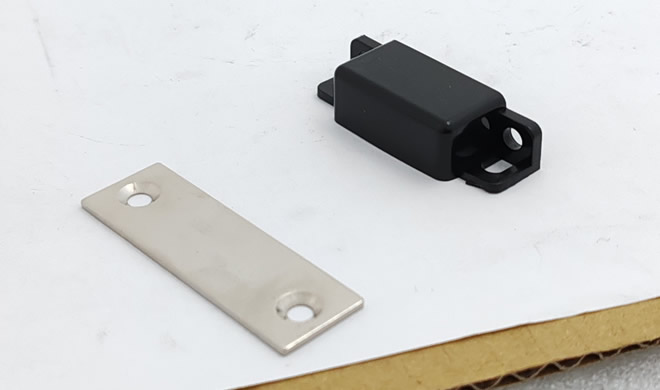
1. Is Magnetic Latch Definitely the Root Cause for Poor Door‑panel Closure?
Not necessarily, yet magnetic latches are among the key components to inspect. Magnetic latches secure equipment door panels through magnetic attraction between built‑in magnets and strike plates. Stable holding force can only be achieved on the condition of sufficient magnetic strength, accurate mounting alignment and full surface contact when the door is shut. Even if the magnetic latch itself functions properly, offset door geometry or incomplete fitting will weaken the holding performance. When abnormal door‑closing issues occur, inspect the overall condition of the door assembly first before concluding whether the magnetic latch has failed.
2. Common Factors Leading to Unreliable Door‑panel Closure
Degraded holding force of magnetic latches ranks as one of the most frequent triggers.
After long‑term operation, internal magnets may suffer performance decay due to impact exposure, high‑temperature environment or continuous abrasion. Consequently, the door cannot stay firmly closed and may pop open under minor external force.
Mounting misalignment also greatly impairs closing performance.
If the magnetic latch and strike plate are misaligned, insufficient contact area will reduce effective attraction even with intact magnet strength.
Deformation of door panel or door frame represents another typical failure source.
Subjected to collision, mechanical load and structural stress during equipment service life, door panels may become distorted and fail to sit flush, which prevents magnetic latches from generating reliable attraction.
Besides, worn hinges, loose fastening bolts and trapped foreign debris will shift the door closing position and interfere with normal magnetic‑latch engagement.
3. Troubleshooting Steps to Verify Magnetic‑latch Related Failures
First, visually verify full contact between the magnetic latch and strike plate. Obvious offset or residual gaps after door closure indicate priority checks for mounting alignment and door‑panel geometry. Next, perform holding‑force testing: pull the closed door gently. If the door opens with little pulling force while physical contact is maintained, the magnet may have lost part of its magnetic power.
Carry out further inspection covering hinge tightness, door‑panel sagging and door‑frame distortion, as these defects directly undermine magnetic‑latch working performance. For aged equipment, check whether latch fasteners are loose and whether oil contamination or iron chips accumulate on attraction surfaces; such contaminants will significantly cut down effective holding capacity.
4. Preventive Measures against Magnetic‑latch‑induced Closing Malfunctions
Proper installation and routine maintenance play decisive roles. During assembly, precisely align magnetic latches with corresponding strike plates to guarantee complete surface contact upon door closure. In daily operation, periodically check mounting tightness, cleanliness of attraction surfaces and magnetic performance. Replace components promptly once obvious attenuation of holding force is detected.
Conduct regular inspections for hinges, door frames and door‑panel installation status to eliminate position offset of door assemblies. For machinery with heavy vibration, reinforce door positioning structures and minimize repeated impact on door panels, so as to extend service life of magnetic latches and the entire door mechanism.
FAQ
Q: Does poor door‑panel closure always mean a defective magnetic latch?
A: No. Possible root causes also include hinge wear, door‑panel deformation, mounting offset and distorted door frames.
Q: What symptoms indicate degraded holding force of magnetic latches?
A: Typical signs include insecure door latching, door popping open under slight vibration, and repeated pressing required to achieve magnetic engagement.
Q: Will mounting offset of magnetic latches weaken attraction performance?
A: Yes. Misalignment reduces effective contact area, resulting in remarkable drop of holding force.
Q: Can door‑panel sagging cause magnetic‑latch malfunction?
A: Yes. Position deviation of door panels gives rise to mis‑mating between latches and strike plates and breaks normal magnetic attraction.
Q: How to prolong the service life of magnetic latches?
A: Maintain accurate mounting alignment, keep attraction surfaces clean, avoid heavy impact loads, and resolve door‑panel and hinge anomalies in a timely manner. These practices can effectively extend the operating lifespan of magnetic latches.
Copyright © 2016-2025 Forrun (Guangdong) Industrial Technology Co., Ltd All Rights Reserved.