- Contact Us
- -
- Payment
- -
- 中文版
Knowledge Center · 2026-08-24 09:35:22 · 199 hits
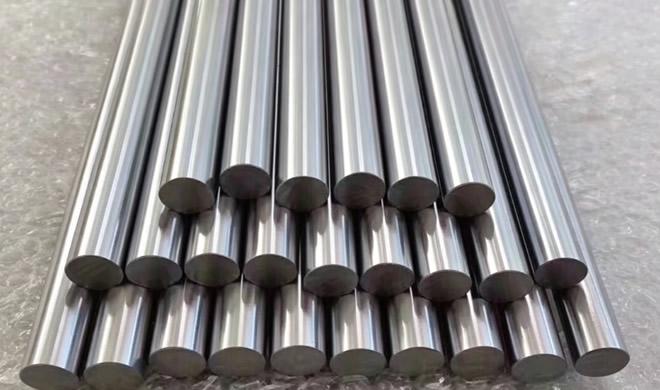
When a guide shaft cooperates with linear bearings, oil‑free bushings or other sliding components, proper fitting clearance and mounting coaxiality must be maintained. Deviations in the motion trajectory between the guide shaft and mating parts generate extra lateral forces, which significantly raise sliding resistance. Especially in dual‑shaft or multi‑shaft guiding systems, parallelism errors between two guide shafts may cause the moving assembly to bind at certain travel positions. Such problems seldom stem from dimensional defects of the guide shaft itself; they are mostly induced by overall assembly inaccuracy.
Insufficient mounting precision ranks among the most frequent triggers. Tilting installation of guide shafts, misaligned support brackets, and non‑coaxial fixation at both ends introduce eccentric loading between shafts and bearings. This adverse effect on running resistance becomes more pronounced as stroke length increases.
Abnormal surface conditions of the guide shaft also impair motion performance. Scratches, rust, burrs or wear marks on the shaft surface create localized resistance when mating components pass over damaged zones, and may further scratch or damage bearings and bushings in severe cases.
Unreasonable fitting clearance deserves close attention as well. Insufficient clearance raises motion resistance due to thermal expansion and may even result in complete seizure. Excessive clearance causes mechanical shaking, deflection and abnormal abrasive wear, which can develop into sticking after prolonged operation.
Improper lubrication mainly affects guide assemblies relying on grease or oil lubricants. Insufficient lubrication elevates frictional resistance. Improper grease selection, heavy contamination or lack of periodic maintenance can also increase overall sliding resistance.
If the guide system runs smoothly without payload but starts to stick once workpieces or linkages are mounted, eccentric load and lateral force should be prioritized for inspection. Guide shafts are designed primarily for positional guidance. When the center of gravity of payload deviates from the motion center, or uneven forces act on the mounting plate, additional offset loads apply to bearings or bushings. Even with dimensionally qualified guide shafts, actual operating resistance can rise sharply. For long‑stroke mechanisms, guide shaft rigidity must also be considered. Excessive shaft deflection under applied load modifies local fitting conditions and triggers sticking symptoms.
Run the mechanism slowly under light‑load conditions and observe whether sticking repeats at fixed positions. If binding consistently occurs at the same travel point, inspect shaft straightness, surface damage and local mounting offsets. When high resistance exists across the full stroke, focus verification on fitting clearance, coaxial alignment and lubrication status. For sticking that only appears after loading, check eccentric payload distribution, mounting‑plate rigidity and parallelism among multiple guide shafts.
Procurement Recommendations: When selecting guide shafts, do not only focus on shaft diameter and overall length. Confirm straightness specification, surface treatment, hardness, raw material grade, and fitting requirements for matched linear bearings or bushings according to practical motion conditions. For long‑stroke and high‑precision equipment, mounting structure and shaft rigidity shall be comprehensively evaluated.
Adding extra lubricant is a typical quick‑fix measure when sticking happens. Nevertheless, if the real root cause lies in misalignment, insufficient clearance or eccentric load, extra lubrication can only deliver temporary improvement without eliminating fundamental defects.
Furthermore, inspection shall not be limited to a single guide shaft. For dual‑shaft or multi‑shaft mechanisms, parallelism and mounting reference of all guide shafts directly determine overall motion resistance.
Q: What are the most frequent causes of guide shaft sticking?
A: Typical causes include mounting misalignment, surface damage on guide shafts, improper fitting clearance, abnormal lubrication, and eccentric payload conditions.
Q: Why does sticking frequently take place at one specific position?
A: It is generally necessary to check shaft straightness, local surface damage and partial deviations within the mounting structure at that location.
Q: Is lubrication mandatory for guide shafts?
A: It depends on matched bearings or bushings. Certain oil‑free bushings support maintenance‑free dry running, whereas conventional sliding pairs require lubrication following official product specifications.
Q: Does a thicker guide shaft always guarantee smoother operation?
A: Larger shaft diameter improves rigidity, yet it cannot resolve misalignment or eccentric‑load problems. Shaft sizing should combine actual payload and stroke requirements.
Q: Why do dual‑guide‑shaft systems tend to suffer from sticking?
A: Parallelism errors or mounting offset between two shafts constrain moving parts, generating offset loads and increased sliding resistance.
Copyright © 2016-2025 Forrun (Guangdong) Industrial Technology Co., Ltd All Rights Reserved.