- Contact Us
- -
- Payment
- -
- 中文版
Knowledge Center · 2026-11-04 09:35:49 · 8 hits
1. Definition and Role of Seals
1.1 Basic concept
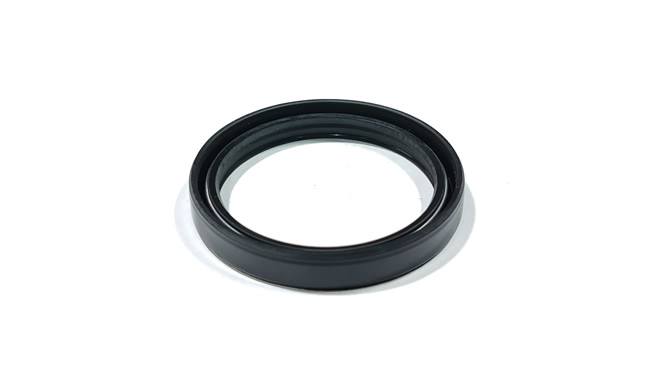
A seal (sealing ring) is a component used to prevent fluid or solid particles from leaking through the joint faces between adjacent parts. It effectively blocks the passage of media such as gases and liquids between equipment components, keeping the system operating correctly.
1.2 Key functions
Ensure equipment safety and stability — a reliable seal prevents leakage that could cause pressure loss, contamination, or hazard.
Improve production efficiency and reduce leakage loss — contained media mean less downtime and less waste.
Extend equipment life and lower maintenance cost — sealing out contaminants protects bearings, cylinders, and other precision parts.
Most seals in FA equipment take the form of an O-ring, lip seal, or gasket; the material is what decides whether the seal survives the actual service condition.
2. Common Seal Materials and Characteristics
2.1 Rubber-based seals
Natural rubber (NR). Good elasticity and abrasion resistance. Suited to general industrial use and hydraulic systems where oil contact is not a concern; poor resistance to oils and weathering.
Nitrile rubber (NBR). Excellent oil resistance. Widely used in automotive, aerospace, and general hydraulic and pneumatic seals.
Fluoroelastomer (FKM, e.g., Viton). Outstanding high-temperature and chemical-corrosion resistance. Common in chemical, petroleum, and aggressive-media service.
Silicone rubber (SiR / VMQ). Very wide temperature range (about −60 °C to 250 °C) and good hygiene profile. Preferred in food, medical, and other cleanliness-sensitive industries; mechanically weaker than NBR/FKM.
2.2 Non-rubber polymer seals
Polytetrafluoroethylene (PTFE). Chemically inert — it reacts with almost nothing — and has a very low friction coefficient. Used where chemical resistance and low stick-slip matter, such as precision instruments and corrosive duty.
Polyurethane (PU). High strength and excellent abrasion resistance. Suitable for high-pressure environments such as hydraulic rod seals and heavy-duty wipers.
2.3 Metal seals
Made mainly from stainless steel, copper, or other metals. They tolerate extreme pressure and temperature that would destroy elastomers, used in high-pressure, high-temperature, or vacuum extreme-service conditions.
Material comparison (typical ranges — grade- and compound-dependent, for guidance only):
| Material | Temp range | Oil resistance | Chemical/acid resistance | Key property | Typical use |
|---|---|---|---|---|---|
| NR | −40 to 100 °C | Poor | Poor | High elasticity, abrasion | General, non-oily duty |
| NBR | −40 to 120 °C | Excellent | Moderate | Oil-resistant | Automotive, hydraulics, pneumatics |
| FKM | −20 to 250 °C | Excellent | Excellent | Heat + chemical | Chemical, petroleum, aggressive media |
| SiR (VMQ) | −60 to 250 °C | Poor–moderate | Moderate | Wide temp, hygienic | Food, medical, sanitary |
| PTFE | −200 to 260 °C | Excellent | Excellent (inert) | Low friction, inert | Precision, corrosive media |
| PU | −40 to 80 °C | Good | Moderate | High strength, abrasion | High-pressure hydraulics |
| Metal | Very high (material-dependent) | Excellent | Excellent | Extreme pressure/temp | Extreme-service, vacuum, high pressure |
3. Selection Considerations
3.1 Working-environment factors
Temperature range. Each material has its own service-temperature window; choose against the actual min–max the seal will see, not just the nominal operating point.
Pressure rating. Under high pressure, prioritize PU or metal seals, which hold up where soft elastomers extrude or fail.
Media characteristics.
Chemical nature: for strong acids, alkalis, or other aggressive media, use FKM or PTFE seals.
Flowability: highly fluid media call for materials with good self-energizing sealing behavior, so the seal tightens under pressure rather than being pushed past its groove.
3.2 Beyond the three basics (practical notes)
Hardness (Shore A). Softer compounds (≈70 Shore A) seal better at low pressure; harder compounds (≈90) resist extrusion under high pressure. Match hardness to the pressure and clearance.
Dynamic vs. static. A static seal (flange, cover) tolerates a wider material choice; a dynamic seal (rod, piston) must also handle friction and wear — favor NBR, PU, or PTFE there.
Compression set. Over time a compressed elastomer may not recover; high-temperature duty should favor materials with low compression-set grades.
4. FAQ
Q: Which material is best for oil-resistant seals? NBR is the standard choice for oil and fuel contact; FKM when heat or aggressive additives are also present.
Q: What seal should I use for strong acid or alkali? FKM or PTFE — both resist aggressive chemicals far better than general rubbers.
Q: Is silicone good for everything because of its wide temperature range? No. Silicone has poor oil and tear resistance; it suits sanitary, food, and medical use, not oily or high-mechanical-stress duty.
Q: Can a soft seal handle high pressure? Not well — soft elastomers extrude into the clearance. Use harder compounds, PU, or metal, or add a backup ring.
Q: What does "self-energizing" mean? The seal's geometry lets rising system pressure push it tighter against the mating surface, improving sealing as pressure increases.
Copyright © 2016-2025 Forrun (Guangdong) Industrial Technology Co., Ltd All Rights Reserved.