- Contact Us
- -
- Payment
- -
- 中文版
Knowledge Center · 2026-09-02 09:42:38 · 198 hits
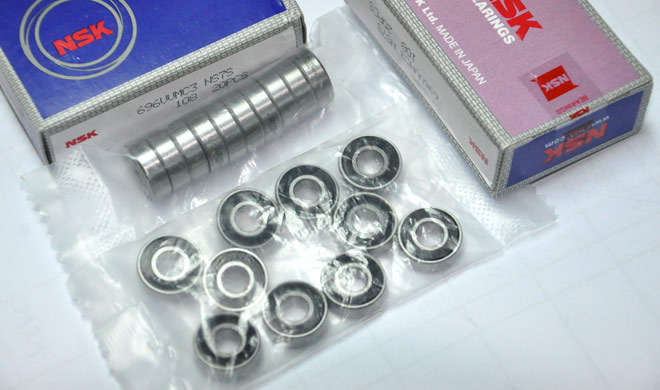
Bearing corrosion initiates primarily when moisture and corrosive agents penetrate the bearing interior. In humid environments with high ambient humidity or condensation, water ingress triggers chemical reactions on metallic raceway surfaces. Insufficient sealing allows dust, salt mist and chemical contaminants to enter the bearing cavity, further accelerating corrosive attacks. Once grease becomes contaminated by water, its lubricating performance deteriorates, creating localized corrosive conditions that produce rust spots and pockmarks on raceways and rolling elements.
During bearing operation, rolling elements and raceways are subjected to cyclic contact loading. Adequate lubrication builds a continuous protective oil film that prevents direct metal‑to‑metal contact. Insufficient grease supply, improper lubricant viscosity or aged grease will degrade the load‑carrying capacity of the oil film. This raises contact stress and frictional interaction across raceway surfaces. After repeated cyclic loading, subsurface material develops fatigue cracks, which propagate and evolve into surface pitting or spalling. Distinct from ordinary abrasive wear, pitting fundamentally originates from rolling contact fatigue.
Sustained operation beyond the bearing’s designed load rating elevates contact stress between rolling elements and raceways. Shock loads, offset loading and shaft misalignment generate localized peak stresses far exceeding theoretical nominal values, triggering premature fatigue failure in concentrated zones. Under high‑speed operating conditions, mismatched bearing selection, inadequate lubrication or improper internal clearance will compound raceway damage and expedite pitting progression.
Improper installation acts as a triggering factor for both corrosion and pitting. Impact force during mounting, housing misalignment and incorrect fit tolerances induce abnormal localized stress, resulting in uneven load distribution over raceway surfaces. Failed sealing permits moisture, particulate debris and corrosive substances to invade internal bearing components. For applications exposed to humidity, dust or chemical vapors, well‑designed sealing configurations are critical to extend bearing service life.
Corrosion is characterized by rust discoloration, rust patches and corrosion pits, closely correlated with exposure to water, salt spray or chemical reagents. By contrast, contact‑fatigue pitting manifests as dense tiny indentations within load‑bearing zones of raceways and rolling elements, gradually expanding into flaky spalling. In field‑operating equipment, mixed failure modes frequently co‑occur. For instance, moisture‑induced corrosion degrades surface integrity and subsequently reduces contact‑fatigue endurance. Reliable diagnosis cannot rely solely on visual surface morphology.
One widespread misjudgment labels every surface indentation on bearings as pitting. Corrosion pits and fatigue‑originated pitting differ substantially in formation mechanisms. Another misconception assumes replacing grease can resolve all pitting‑related troubles. Once fatigue spalling has occurred on raceways, optimizing lubrication alone cannot repair already‑damaged bearing surfaces.
What are the leading causes of bearing corrosion?
Corrosion mostly stems from water intrusion, condensation, salt mist, chemical agents and compromised sealing systems.
What triggers bearing pitting?
It is driven by long‑term cyclic contact stress. Poor lubrication, overloading and biased load distribution serve as major accelerating contributors.
Can grease deficiency cause both corrosion and pitting simultaneously?
Yes. Inadequate lubrication heightens contact‑fatigue risk. Meanwhile, water‑contaminated grease will promote corrosive deterioration.
Is a pitted bearing eligible for continued service?
Evaluate according to pitting severity and location. Obvious expanding pits or spalling shall discontinue operation, otherwise excessive vibration and noise will develop.
How to mitigate bearing corrosion and pitting?
Select appropriate bearing types and sealing structures, maintain qualified lubrication status, control applied loads and assembly precision, and block ingress of moisture, dust and corrosive media.
Copyright © 2016-2025 Forrun (Guangdong) Industrial Technology Co., Ltd All Rights Reserved.