- Contact Us
- -
- Payment
- -
- 中文版
Knowledge Center · 2026-08-21 09:24:52 · 190 hits
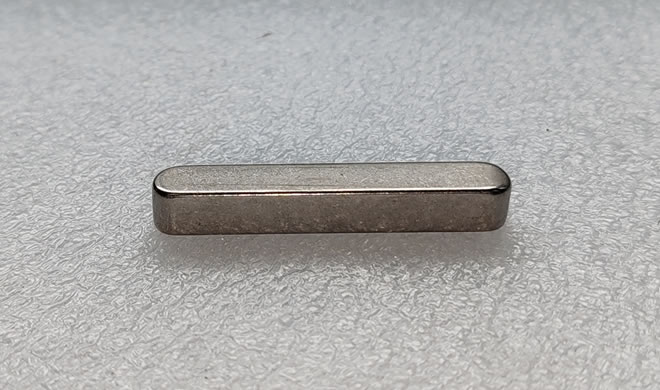
Shear fracture of flat keys upon startup generally indicates that the transmission system is subjected to excessive impact load within a very short time window.
A flat‑key serves to transmit torque between the shaft and hub. During steady‑state operation, torque fluctuation remains relatively mild. At startup, however, the motor must overcome static friction, load inertia and starting resistance, generating substantial instantaneous torque across the whole drive train. Once this transient impact load exceeds the load‑bearing capacity of the flat key or its mating structure, shear failure will occur. Therefore, key fracture during startup mostly points to anomalies within the complete transmission system, rather than merely defective flat‑key material quality.
Excessive startup impact represents the most prevailing root cause.Under conditions such as direct‑on‑line starting, high load inertia or frequent start‑stop cycles, instantaneous output torque can far exceed torque values during continuous running. The flat key becomes the mechanically weak link and fails first.
Abnormal fitting between flat key and keyway is another major failure trigger.Large dimensional deviations from machining, excessive clearance or insufficient contact area will lead to localized load concentration. The flat key is then exposed to amplified shear stress and prone to fracture.
Improper installation also cannot be overlooked.Skewed flat‑key placement, incomplete seating inside the keyway, or misalignment between shaft and hub will result in uneven force distribution and amplify impact during startup. Additional risk factors include loose shaft‑to‑hub fit, coupling misalignment, mechanical jamming, sudden load surge, and improper selection of flat‑key material or dimension, all of which raise the probability of shear breakage.
If flat‑keys keep fracturing only at startup while equipment runs normally under working conditions, focus should be placed on startup operating conditions instead of simply replacing the key. First examine the fracture surface morphology. A clean, flat fracture surface with typical shear characteristics signifies transient overload. Fractures accompanied by heavy wear or plastic deformation suggest long‑term fitting abnormalities.
Inspect keyways for wear, deformation or local indentation, and verify whether dimensional tolerances of shafts, hubs and keyways comply with design specifications. Meanwhile, audit motor starting mode, coupling coaxiality, and check whether driven mechanisms suffer jamming, locked‑rotor conditions or excessive impact loading. If fracture recurs even after fitting higher‑strength flat keys, thorough investigation of the entire transmission assembly is required instead of repeated key replacement.
At the equipment design phase, select flat‑key dimensions according to transmitted torque requirements, and enforce machining precision for shafts, keyways and hubs. For machinery with large inertia or prominent shock loads, soft‑start, variable‑frequency drive or other gradual‑starting methods are recommended to suppress peak transient torque at startup.
During assembly, guarantee proper mating between flat keys and keyways, avoiding over‑tight fit, excessive clearance or incomplete installation. In routine maintenance, perform periodic checks covering keyway wear, coupling coaxiality and overall transmission performance. Timely rectification of looseness, biased loading and mechanical jamming helps eliminate abnormal stress exerted on flat keys at source.
Repeated flat‑key shear failure at startup is typically caused by severe transient shock within the transmission system, rather than poor quality of the key itself. Starting strategy, load inertia, keyway fit‑up, assembly quality and mechanical operating status collectively determine stress conditions applied to flat keys. Optimizing startup profiles, improving assembly accuracy and resolving transmission abnormalities deliver more durable solutions than merely swapping new flat keys.
Q: Does flat‑key fracture on startup always stem from poor key quality?
A: Not necessarily. Excessive startup impact, abnormal fitting clearance and mechanical jamming occur far more frequently as failure triggers than material defects of the flat key.
Q: Why does key breakage only take place at startup while equipment operates smoothly afterwards?
A: At startup, the drive system needs to overcome static friction and load inertia, producing instantaneous torque significantly higher than torque during regular operation.
Q: Will installing higher‑strength flat keys solve the problem completely?
A: Not guaranteed. If impact loads or fitting defects remain unaddressed, fracture may re‑occur. Worse still, shafts or hubs could sustain permanent damage.
Q: Can worn keyways contribute to flat‑key breakage?
A: Yes. Worn keyways create localized stress concentration, subjecting flat keys to elevated shear stress.
Q: What effective measures can reduce flat‑key shear risk during startup?
A: Proper flat‑key dimension selection, qualified assembly precision, optimized starting modes and regular transmission‑system inspection are proven countermeasures against startup‑related key fracture.
Copyright © 2016-2025 Forrun (Guangdong) Industrial Technology Co., Ltd All Rights Reserved.