- Contact Us
- -
- Payment
- -
- 中文版
Knowledge Center · 2026-08-05 11:05:24 · 143 hits
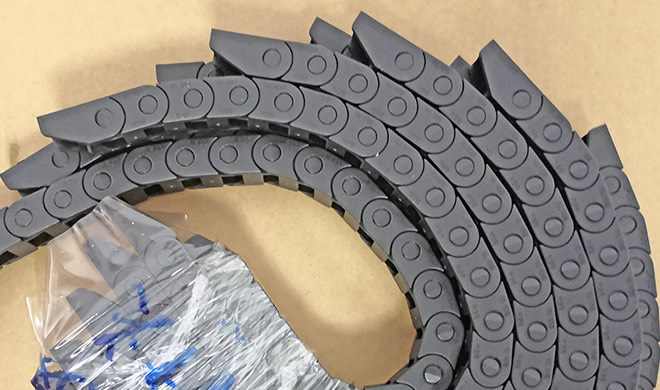
A cable carrier (also known as energy chain or drag chain) is a mechanical protective component used to protect and guide cables, pneumatic hoses and hydraulic tubing during reciprocating motion. It is widely deployed in linear modules, machine tools, robots, automated production lines and other equipment.During equipment operation, the cable carrier bends back and forth continuously following moving components. Therefore, it must bear not only the weight of internal cables and hoses, but also inertial force and cyclic fatigue load generated during movement. If the structure and specification of the cable carrier fail to match actual working conditions, problems such as cracked chain links, fractured joints or motion jamming tend to occur.
The most frequent cause of breakage is mismatched selection against actual operating conditions. If a large quantity of cables and pneumatic hoses are installed inside the carrier, and their total weight exceeds the carrier’s load capacity, the connecting positions of chain links will sustain continuous heavy stress during long-term operation, eventually forming fatigue cracks.
Improper installation is another critical factor leading to fracture. For instance, if the bend radius is smaller than the specified minimum value, chain links will stay in an over-bent state continuously and material fatigue will be accelerated. Twisting, tilting during assembly or unreasonable positioning of fixed ends will introduce extra lateral load, causing premature damage to partial chain links.
In addition, high-speed reciprocating motion, frequent start-stop cycles and harsh operating environments will shorten service life. Inertial impact generated at high running speed increases load on chain links; environments with extreme high/low temperature, oil mist and chemical corrosion may degrade material properties of cable carriers and make them more susceptible to breakage.
To solve cable carrier fracture issues, first reconfirm product specifications based on practical working conditions. During selection, take the total weight and outer dimension of internal cables & hoses, moving speed, travel length and required bend radius into full consideration, avoiding long-term overloading of the cable carrier.
For installation, ensure natural bending of the carrier; never forcibly compress the bend radius. Arrange internal cables reasonably to avoid mutual extrusion and tangling.For equipment with high-speed and high-frequency reciprocating motion, select cable carriers with superior dynamic performance. For environments featuring high temperature, oil mist or heavy dust, choose products with appropriate materials and protection grades matching application conditions.
When purchasing cable carriers, do not select dimensions merely according to installation space on machinery. Judgement shall be combined with real motion requirements.Key verification points include: whether the inner cavity size can accommodate all cables, whether the bend radius meets cable specifications, and whether the load capacity can sustain continuous operating loads over long cycles.
If applied to linear modules, robotic equipment or high-speed automation machinery, extra attention should be paid to allowable operating speed, cycle life and fatigue resistance. Ordinary cable carriers shall not be adopted for heavy-duty working conditions, otherwise premature failure will happen.
Many users assume cable carrier breakage is always caused by defective product quality. In practical applications, however, improper model selection and non-standard installation are far more common triggers.
Another misunderstanding: larger-size cable carriers are necessarily more reliable. Oversized specifications increase motion inertia, raise operational resistance of equipment, and even deteriorate motion response speed.There is also a widespread misconception that the carrier only needs to protect cables. Users often ignore the influence of cable arrangement, fixing method and bending state on carrier service life.
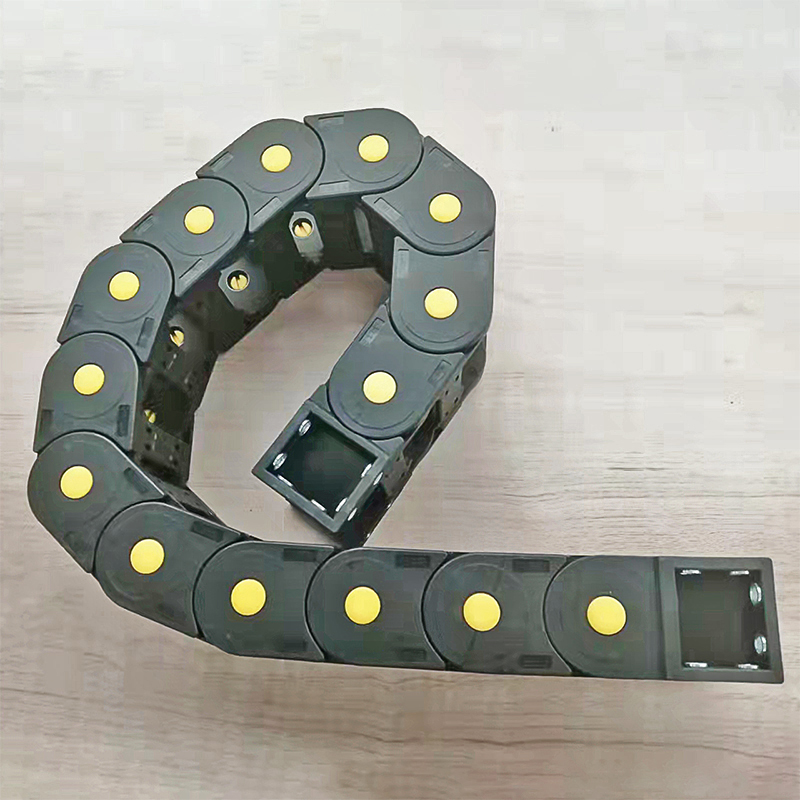
There is no fixed replacement cycle. Judgement depends on operating frequency, environmental conditions and actual wear status. Inspection is required promptly once cracks, abnormal noise or motion jamming appear.
Replacement of individual links is supported by partial structures. Nevertheless, overall replacement is recommended if the carrier shows widespread aging or fatigue damage.
Not necessarily. The decisive factors are total cable weight, layout arrangement and matching degree with the carrier’s load capacity.
For high-speed machinery, focus on dynamic load capacity, allowable speed, bend radius and cyclic service life of cable carriers.
Regular maintenance is necessary. Periodically inspect wear condition of chain links, fixing status and running state of internal cables to detect abnormalities at an early stage.
Copyright © 2016-2025 Forrun (Guangdong) Industrial Technology Co., Ltd All Rights Reserved.